Abstract
Note from the Editor
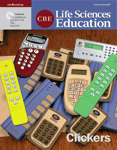
Use of the audience response devices known as “clickers” is growing, particularly in large science courses at the university level, as evidence for the pedagogical value of this technology continues to accumulate, and competition between manufacturers drives technical improvements, increasing user-friendliness and decreasing prices. For those who have not yet tried teaching with clickers and may have heard unsettling stories about technical problems with earlier models, the decision to use them and the choice of an appropriate brand may be difficult. Moreover, like any classroom technology, clickers will not automatically improve teaching or enhance student learning. Clickers can be detrimental if poorly used, but highly beneficial if good practices are followed, as documented in a growing body of educational literature.
In this Special Feature, we present two reviews that should assist instructors and teachers at all levels in taking the step toward clicker use and choosing an appropriate model. In the first, Barber and Njus compare the features, advantages, and disadvantages of the six leading brands of radio-frequency clicker systems. In the second, Caldwell reviews the pedagogical literature on clickers and summarizes some of the best practices for clicker use that have emerged from educational research. In a related article elsewhere in this issue, Prezsler et al. present the results of a study showing that clicker use can improve student learning and attitudes in both introductory and more advanced university biology courses.
Audience response systems (ARS) or clickers, as they are commonly called, offer a management tool for engaging students in the large classroom. Basic elements of the technology are discussed. These systems have been used in a variety of fields and at all levels of education. Typical goals of ARS questions are discussed, as well as methods of compensating for the reduction in lecture time that typically results from their use. Examples of ARS use occur throughout the literature and often detail positive attitudes from both students and instructors, although exceptions do exist. When used in classes, ARS clickers typically have either a benign or positive effect on student performance on exams, depending on the method and extent of their use, and create a more positive and active atmosphere in the large classroom. These systems are especially valuable as a means of introducing and monitoring peer learning methods in the large lecture classroom. So that the reader may use clickers effectively in his or her own classroom, a set of guidelines for writing good questions and a list of best-practice tips have been culled from the literature and experienced users.