Bioinformatics in High School Biology Curricula: A Study of State Science Standards
Abstract
The proliferation of bioinformatics in modern biology marks a modern revolution in science that promises to influence science education at all levels. This study analyzed secondary school science standards of 49 U.S. states (Iowa has no science framework) and the District of Columbia for content related to bioinformatics. The bioinformatics content of each state's biology standards was analyzed and categorized into nine areas: Human Genome Project/genomics, forensics, evolution, classification, nucleotide variations, medicine, computer use, agriculture/food technology, and science technology and society/socioscientific issues. Findings indicated a generally low representation of bioinformatics-related content, which varied substantially across the different areas, with Human Genome Project/genomics and computer use being the lowest (8%), and evolution being the highest (64%) among states' science frameworks. This essay concludes with recommendations for reworking/rewording existing standards to facilitate the goal of promoting science literacy among secondary school students.
INTRODUCTION
Bioinformatics is a modern, growing scientific field created by the intersection of biology, computer science, and information technology to support the storage, organization, and retrieval of biological data (National Center for Biotechnology Information [NCBI], 2006). Recent developments in both molecular biology and information technology have made biological data much more readily available to scientists and to educational institutions, and this growing amount of data has created an “absolute requirement” for the use of computers to organize, analyze, and process such information. A notable example from the field has been the completion of the Human Genome Project (International Human Genome Sequencing Consortium, 2004). According to the NCBI, “the ultimate goal of the field [bioinformatics] is to enable the discovery of new biological insights as well as to create a global perspective from which unifying principles in biology can be discerned” (NCBI, 2006). Bioinformatics is not only revolutionizing modern biology but also redefining how biological research is carried out, and it is impacting industrial and medical practices (Bloom, 2001).
Broadly viewed, the field of bioinformatics incorporates three main areas: 1) genomics, 2) proteomics, and 3) systems biology (Campbell and Heyer, 2003). Genomics includes DNA sequence data, whereas proteomics specifically deals with the function, shapes, interactions, and abundance of proteins. Systems biology is the most recent and complex branch in the field of bioinformatics, and it examines the extensive role of protein and DNA interactions on the function of cells, tissues, and organs as a whole. For example, systems biology can describe the pathway of enzymes and their various metabolites by using computer data models, or it can illustrate brain function by using computer images. The field of bioinformatics makes the areas of genomics, proteomics, and systems biology possible.
Current major research and clinical applications of bioinformatics include its use to improve the diagnosis and detection of diseases, to promote vaccine development by screening databases for pathogen genomes, and to increase the understanding of evolutionary processes through analysis of nucleotide/protein sequence mutations (Campbell and Heyer, 2003; Cambridge Health Institute, 2004; Oak Ridge National Laboratory [ORNL], 2006; NCBI, 2006). Beyond these uses, the advent of bioinformatics poses legal, ethical, moral, and policy challenges for scientists and the public (Bloom, 2001; Smith and Emmeluth, 2002; Gabric, 2003). These include, for example, the possible use or misuse of biological information by employers, courts, and health insurance companies and the potential to start a new eugenics movement. A more extensive listing of the pure and applied aspects of bioinformatics and ethical, moral, and legal issues can be found in Supplemental Material 1.
In education, the importance of bioinformatics at the postsecondary level has been recognized by a variety of initiatives (Ferguson, 2002; Counsell, 2003) and employment in bioinformatics fields is expanding rapidly (Crosby, 2003). Some online educational forums (e.g., Biology Student Workbench, 2003) and private educational institutions (e.g., Dolan DNA Learning Center, 2007) have organized bioinformatics-based lessons. Additionally, individual bioinformatics-based lessons are emerging in both the secondary and postsecondary levels (Kossida et al., 2002; Gabric, 2003; Lowery and Plesniak, 2003; Wefer, 2003; Maier, 2001; Musante, 2004; Elwess et al., 2005). The rapid proliferation of bioinformatics and the congruent emergence of bioinformatics in education suggest a need to study how educational guidelines are institutionalizing bioinformatics content.
PURPOSE
Given the broadly conceived goal of scientific literacy articulated in current science education reform literature, science educators should be aware of the potential of bioinformatics to influence and enhance secondary school biology curricula (American Association for the Advancement of Science [AAAS], 1993; National Research Council, 1996). Although the National Science Education Standards (NSES) contain no specific connections to the field of bioinformatics, Benchmarks for Scientific Literacy (AAAS, 1993) provide goals for student understanding that can be tied to bioinformatics. However, the Benchmarks do not address the array of socioscientific issues posed by the advent and use of such information (Zeidler, 2001; Zeidler et al., 2005). Neither the NSES nor Benchmarks are explicit, and the specificity of science content goals for high school is the responsibility of individual states.
An underlying rationale for the study of the incorporation of bioinformatics materials and ideas into education emerges from a Science, Technology and Society (STS) perspective (Bybee, 1986), and, more specifically, from the emerging socioscientific issues (SSI) framework (Zeidler et al., 2005). The incorporation of bioinformatics topics represents an opportunity to provide both content-rich and socioscientific perspectives for the science curriculum (Sadler et al., 2006). By understanding how the emerging field of bioinformatics is represented and incorporated into state standards, policy makers and educators should be better equipped to promote the achievement of scientific literacy for all.
State science standard frameworks vary considerably (Lerner, 2000; Skoog and Bilica, 2002; Gross, 2005). Previous studies of state standards have focused on curricular topics such as evolution (Skoog and Bilica, 2002), curricular emphases such as STS (Kumar and Berlin, 1998), or they have “graded” the standards based upon composite scores of earth science, chemistry, physical science, biology, inquiry, and evolution content (Lerner, 2000). In this study, we sought to investigate the extent to which bioinformatics is represented in state standards for secondary schools and to ascertain what gaps, if any, exist in these standards. It is inevitable that bioinformatics will continue to infiltrate into secondary curricula, and state standards will need to be reorganized or reworked to efficiently reflect this infiltration. Although Gross (2005) has criticized the length of many state standards, complaining about their burgeoning volume, we seek to reorganize standards by making existing standards more inclusive, rather than adding to the list as scientific discoveries emerge.
METHODS
State science standards across 49 U.S. states (Iowa does not have state science standards) and the District of Columbia were evaluated to assess the degree to which they incorporated bioinformatics content and related issues. State framework documents were obtained from each state's website (data collected summer 2005), and they were reviewed for bioinformatics content (Council of Chief State School Officers, 2005). Because individual states vary in the way that they structure their required science courses, standards from a state's high school-level Introductory Biology course were analyzed.
Although definitions of bioinformatics vary, given the broad nature and rapid proliferation of the field, this investigation was confined to the meta-definitions that illustrate the applications and socioscientific implications of bioinformatics. That is, standards that articulated the pure or applied applications of bioinformatics, or that related to the socioscientific aspects of bioinformatics, were categorized based on the common themes that emerged. The number of states that were represented in each category was used to calculate the percentage representation of each of the nine emergent categories. The methodology was consistent in the way that each standard was examined to determine whether bioinformatics was or was not articulated by comparing each standard to the meta-definitions of bioinformatics. For example, the science frameworks for both Tennessee and South Carolina both specifically mention the Human Genome Project, and so they were counted in this category. To increase the validity of the data collected, the methodology was validated by two senior science educators, and the bioinformatics content identified in the standards was reviewed for accuracy and inclusiveness by a scientist in the field of bioinformatics. In some cases, standards contained information that was used in multiple categories, so a multiple coding scheme was used to categorize all instances of bioinformatics whether they occurred individually or embedded multiply within a state standard. The results were tabulated, and the percentages of the various areas for each state were calculated (Table 1).
| Human Genome Project | Forensics | Evolution | Classification | Nucleotide variations | Medicine | Computer use | Agriculture/food technology | STS/SSI | |
|---|---|---|---|---|---|---|---|---|---|
| Alabama | x | x | x | x | x | ||||
| Alaska | |||||||||
| Arizona | x | x | x | ||||||
| Arkansas | x | x | |||||||
| California | x | x | x | x | |||||
| Colorado | x | x | |||||||
| Connecticut | x | x | x | ||||||
| Delaware | x | x | x | x | x | x | x | ||
| D.C. | x | x | x | x | x | ||||
| Florida | |||||||||
| Georgia | x | x | x | x | |||||
| Hawaii | x | x | x | ||||||
| Idaho | x | x | x | x | |||||
| Illinois | x | ||||||||
| Indiana | x | x | x | ||||||
| Kansas | x | x | |||||||
| Kentucky | x | x | |||||||
| Louisiana | x | x | x | x | x | ||||
| Maine | x | x | x | ||||||
| Maryland | x | x | x | ||||||
| Massachusetts | x | x | |||||||
| Michigan | x | x | x | x | |||||
| Minnesota | x | x | |||||||
| Mississippi | x | x | x | x | x | ||||
| Missouri | x | x | x | x | x | x | |||
| Montana | |||||||||
| Nebraska | x | ||||||||
| Nevada | x | x | x | ||||||
| New Hampshire | x | x | |||||||
| New Jersey | x | x | x | ||||||
| New Mexico | x | x | x | x | x | ||||
| New York | x | x | x | x | |||||
| North Carolina | x | x | x | x | |||||
| North Dakota | x | x | |||||||
| Ohio | x | x | x | ||||||
| Oklahoma | x | x | |||||||
| Oregon | x | x | |||||||
| Pennsylvania | x | x | x | ||||||
| Rhode Island | x | x | x | x | x | x | x | ||
| South Carolina | x | x | x | x | x | x | |||
| South Dakota | x | ||||||||
| Tennessee | x | x | x | x | x | x | x | ||
| Texas | x | x | |||||||
| Utah | x | x | |||||||
| Vermont | x | x | x | ||||||
| Virginia | x | ||||||||
| Washington | x | x | |||||||
| West Virginia | x | x | x | x | |||||
| Wisconsin | |||||||||
| Wyoming | |||||||||
| Total | 4 | 12 | 32 | 22 | 29 | 14 | 4 | 13 | 19 |
| Percentage | 8 | 24 | 64 | 44 | 58 | 28 | 8 | 26 | 38 |
RESULTS
Despite the increasing incorporation of bioinformatics into the field of biology, the term bioinformatics does not occur in any of the state standards The degree to which related bioinformatics content and issues were articulated in state standards emerged in nine distinct areas: 1) Human Genome Project/genomics, 2) forensics, 3) evolution, 4) classification, 5) nucleotide variations, 6) medicine, 7) computer use, 8) agriculture/food technology, and 9) science, technology and society/socioscientific issues (STS/SSI). The emergent category STS/SSI delineated standards that specifically described content and issues relating to bioinformatics on moral, ethical, legal, or social grounds.
Some concepts in biology may nonspecifically reflect bioinformatics content in a broad sense. For example, a central theme in biology, the concept of “form fits function,” can be vaguely linked to nearly all of the bioinformatics applications; although form fits function did emerge across many states, it was not delineated specifically as a bioinformatics category.
Human Genome Project/Genomics
Bioinformatics has played a key role in the Human Genome Project (Cordon and Liu, 2002; International Human Genome Sequencing Consortium, 2004). Rapid DNA sequencing that can then be stored in digital format has enabled researchers to carry out a multitude of research and clinical applications. States that mentioned human genomics, genetic mapping, or the Human Genome Project were grouped together. Surprisingly, only four states (8%) specifically included direct mention of the Human Genome Project in their standards. Standards citing the Human Genome Project frequently were coupled with some description of its potential impact on society. For example, consider the standards for Tennessee and South Carolina.
Tennessee.
Participate in a classroom debate regarding the scientific and ethical issues surrounding current emerging DNA technologies and/or the Human Genome Project.
South Carolina.
Evaluate the impact of DNA technology on society (e.g., bioengineering, forensics, genome project, DNA fingerprinting).
Forensics
The use of DNA technology in forensics has become increasingly popular in the media, as exemplified by crime scene investigations, identification of accident victims, and paternity and child support cases. Forensics is defined by ORNL as “The use of DNA for identification” (ORNL, 2006). Bioinformatics plays a key role in forensics, through DNA storage databases, such as Combined DNA Index System (CODIS; 2005). Individual DNA samples may be either sequenced or DNA fingerprinted to determine the identity of the individual from which the sample derived. The advent of forensic technology highlights one of bioinformatics' direct applications to society.
State standards that suggest teaching about the specific use of DNA/molecular data, advances in DNA technology applied toward forensic analysis, or of DNA fingerprinting were included in this category. Twelve states (24%) made some mention of issues in forensics. For example, consider Delaware.
Delaware.
Examine a DNA profile, produced by gel electrophoresis, or participate in a simulation activity to identify and compare the DNA “fingerprint” in different samples of DNA. Discuss how DNA fingerprinting is used in criminal trials …
In some cases (e.g., Mississippi), states were less specific, but used forensics as an example of what could be taught through the advent of DNA technology (deductive bioinformatics).
Mississippi.
Analyze the applications of DNA technology (forensics, medicine, agriculture).
Evolution
Bioinformatics is modifying current theories in evolution. By comparing nucleotide sequences, amino acid sequences, or both, using computer programs, scientists are able to create new evolutionary models for organisms.
State standards that mention the use of molecular evidence, DNA sequences, or amino acid sequences to examine evolutionary concepts were categorized together. General statements for comparing species to determine evolutionary relationships were excluded. Thirty-two states (64%) incorporated some mention of evolution, when describing bioinformatics concepts. This represented the highest area of bioinformatics-related content. California and Maine are listed here as examples.
California.
Students know how to use comparative embryology, DNA or protein sequence comparisons, and other independent sources of data to create a branching diagram (cladogram) that shows probable evolutionary relationships.
Maine.
Explain the role of DNA in resolving questions of relationship and evolutionary change.
Classification
Similar to evolution, bioinformatics is also modifying the models of classification that are used. Species are compared using multiple alignment programs to group organisms based on DNA/amino acid sequences. Similarly, novel species are identified and grouped with existing organisms using genetic databases, based on molecular similarities. Classification emerged as a separate category from the evolution category. Standards that suggested teaching the use of DNA and/or amino acid sequences to classify organisms were grouped in this category. Twenty-two states (44%) were categorized as having relevance to bioinformatics in classification, including Arizona.
Arizona.
Analyze, using a biological classification system (i.e., cladistics, phylogeny, morphology, DNA analysis), the degree of relatedness among various species.
In some instances (e.g., Nevada), the same standard included both classification and evolutionary models using molecular data. In such a case, the same standard was included in both the classification and evolution category.
Nevada.
Explain how the classification of species is based on similarities (e.g., structural, genetic, molecular) which indicate evolutionary relationships.
Nucleotide Variations
The emergence of nucleotide variations touches on a variety of applications of bioinformatics. Bioinformatics allows scientists to quickly analyze nucleotide sequences on computer programs and search for aberrations in normal sequences. Mutations can be stored, identified, and analyzed using bioinformatics. A researcher can query a nucleotide sequence by using online databases to identify known mutations that exist as alternative alleles. The use of bioinformatics makes the identification of new alleles in populations or of new variations of an infectious/genetic disease easier. States were included as addressing this category when the standards contained ideas related to how changes in DNA sequences can cause mutation and variation. Standards that specifically suggested teaching disease identification though mutation analysis were also grouped in the bioinformatics in medicine category. Twenty-nine states (58%), including Tennessee and Massachusetts, contained standards related to nucleotide mutations that can be generally categorized as relevant to bioinformatics.
Tennessee.
Analyze a series of DNA bases to determine the sequence which demonstrates a mutation.
Massachusetts.
Explain how mutations in the DNA sequence of a gene may be silent or result in phenotypic change in an organism and in its offspring.
Medicine
A promising area for the application for bioinformatics technologies is in the field of medicine. The treatment for disease can be enhanced through rapid identification of specific genetic diseases and infections with biological databases and DNA technology. Moreover, the development of various drugs is made through three-dimensional molecular analysis using computer programs.
The category of medicine was used to group state standards that contain references to molecular/DNA technology applications in the field of medicine. Fourteen states (28%), including West Virginia and Idaho, contained standards that related concepts in bioinformatics to medicine.
West Virginia.
Relate the role of DNA analysis to genetic disorders, forensic science, molecular genetics, and biotechnology.
Idaho.
Know that DNA plays a major role in health issues. Through the development of new technologies, we have discovered new information about the human genome, medical disorders, and forensic sciences.
Computer Use
Bioinformatics would not exist with its current sophistication if it were not for the advent of powerful computers. Although many states emphasize the use of computers and technology in the classroom, general statements about computer technology were not included in this category. However, those state standards that specifically mentioned using computers to analyze biological data or examine or create molecular models were categorized in this group. Although state standards may emphasize computer use in general, only four states (8%), including Missouri and Louisiana, contained standards relevant to specific applications of bioinformatics.
Missouri.
Working in groups, create a computer animation illustrating the processes whereby DNA directs the synthesis of protein.
Louisiana.
Analyze evidence on biological evolution, utilizing descriptions of existing investigations, computer models, and fossil records.
Agriculture/Food Technology
Agriculture and food technology represent a major industry that uses biotechnology to create food products with certain desirable characteristics. Bioinformatics allows new modes of rapidly screening organisms for particular nucleotide sequences and examining or comparing genomes of organisms for desired traits, so that new desired traits can be easily incorporated into the agricultural and food industry. Standards that emerged in this category contained references to the use of DNA biotechnology and DNA technology data in the food industry, agricultural industry, or both. General references to technology were excluded. Thirteen states (26%), including Connecticut and Georgia, contained standards that related to agricultural science that are influenced by bioinformatics.
Connecticut.
Genetic engineering (biotechnology) is used to produce novel biomedical and agricultural products.
Georgia.
Examine the use of DNA technology in forensics, medicine, and agriculture.
Science, Technology and Society and Socioscientific Issues
STS as a pedagogical approach has a rich history that accentuates the value of science for all students, providing connections to major themes in science and to how science affects our daily lives (Kuhn, 1970; Bybee, 1986; Yager, 1990; DeBoer, 1991). Zeidler et al. (2005) have suggested that STS education does not seem to be embedded in a coherent developmental or sociological framework and, as such, they advocate an SSI approach that focuses on empowering students by requiring them to consider the physical and social world around them from a moral and ethical perspective. The field of bioinformatics poses students with many critical ethically and morally ambiguous situations (Supplemental Material 1). States that had standards with specific STS/SSI components were extremely vague in terms of the use of technology. State standards that reflected the need to teach students the ethical, moral, and social implications of the use of DNA technology in science/medicine did so without prescribing a way students may explore such an area (e.g., bioinformatics and biological databases). Although all categories that emerged from this study have STS/SSI components, only standards that explicitly detailed ethical, legal, or social implications of content broadly related to bioinformatics were grouped in the STS/SSI category. General social perspectives toward science and technology were not considered. Nineteen states (38%), including Illinois and Hawaii, contained standards that related STS/SSI components to topics related to bioinformatics.
Illinois.
Analyze the costs, benefits, and effects of scientific and technological policies at the local, state, national, and global levels (e.g., genetic research, Internet access).
Hawaii.
Analyze and evaluate the benefits, drawbacks, and trade-offs of issues raised by the application of biotechnology knowledge of science and in the health field (i.e., moral, ethical, legal, economic, cultural, and/or social).
Alaska served as an example of a standard that did not articulate bioinformatics within an STS/SSI perspective.
Alaska.
Understand that scientific innovations may affect our economy, safety, environment, health, and society and that these effects may be long or short-term, positive or negative, and expected or unexpected.
Although bioinformatics may be used to meet Alaska's vague standard, bioinformatics is not articulated through specific disciplines/technologies, such as genetic technology.
GAPS ACROSS THE STANDARDS
State standards that included statements about bioinformatics were generally ambiguous and overgeneralized. Although it is possible to meet existing standards using bioinformatics lessons, it would take the motivation and initiative of individual teachers to detect the relevance of the bioinformatics topic and to incorporate it into their lessons. Clearly, more guidance is needed for teachers if they are to incorporate bioinformatics ideas into their teaching. An example of a possible modification for the Idaho state standards regarding genomics follows.
Present Standard:
Through the development of new technologies we have discovered new information about the human genome, medical disorders, and forensic sciences.
Proposed Modification:
Students should understand that through the use of new technologies coupled with the application of computer science, we have discovered new information about the human genome, medical disorders, and forensic sciences.
Students should understand the roles of computers in storing and using large amounts of biological information related to a variety of genome projects (e.g., human, mouse, and mustard).
STS/SSI-related standards could also be reworked to specify issues that are generally related to bioinformatics. For example, general and vague statements such as “students should understand the ethical implications of science on society” are common among state frameworks. Additional STS/SSI issues related to bioinformatics can be incorporated as examples/subsets to increase the specificity of existing standards, without adding new standards. Such examples could include legal rights/patent to biological data, funding/control of database use, and pecuniary use of biological data. An example of a possible modification for the Tennessee state standards regarding STS/SSI follows:
Present Standard:
Investigate the scientific and ethical ramifications of genetic engineering, recombinant DNA, selective breeding, hybridization, cell and tissue culture, transgenic animals, and DNA fingerprinting.
Proposed Modification:
Investigate the scientific, ethical, legal, and moral ramifications of genetic engineering, recombinant DNA, selective breeding, hybridization, cell and tissue culture, transgenic animals, DNA fingerprinting, and the availability of rapidly accruing biological data/database storage.
The low representation of standards related to bioinformatics was not unexpected and undoubtedly reflects the “newness” of the field, its emerging use in technology, and the recent recognition of the societal value of bioinformatics. In particular, many states have only vague statements related to bioinformatics, making it difficult to pinpoint explicit bioinformatics applications. Furthermore, the nine categories that emerged were not represented uniformly across most states. The Human Genome Project and the computer use categories had the lowest representation in the standards. They occurred in the standards of four states (8%), whereas evolution had the highest occurrence, at 32 (64%), among states with science frameworks. Clearly, given the progressive nature of the scientific enterprise, policy makers need some mechanism for updating the standards documents. Future research might examine the appropriate place for systems biology in education. Standards could also reflect the importance of genome projects other than the Human Genome Project that, through bioinformatics, have revolutionized modern genetics (e.g., Drosophila and Arabidopsis genomes). Such projects were completely absent from all of the standards documents.
DISCUSSION
Standards that were categorized into the nine emergent themes did not specifically address how to teach bioinformatics. Many standards were simply not categorized into the nine emergent bioinformatics themes because of their vague nature. However, standards could be reworked or reworded to help guide teachers in ways to incorporate bioinformatics into their lessons. This essay suggests ways state standards can make teaching areas of modern biology that are generally related to bioinformatics more salient. There is a growing concern with the proliferation of specialized topics in the state standards that seem to cumulatively increase the breadth of the curriculum at the expense of depth, which is unfortunately antithetical to the rationale for having identifiable standards to guide science curriculum development. It is not necessary to establish a large set of new standards to realize the goal of bringing bioinformatics into secondary school science lessons. Bioinformatics could be effectively incorporated into existing standards by rewording existing standards, and in some cases, this can be done by simply including bioinformatics topics as specific examples of the general intent of a standard. The influx of bioinformatics-related topics into science education will cause some challenges. Figure 1 presents an overview of how education is ultimately influenced by the advent of bioinformatics. Genomics, proteomics, and systems biology interact to influence the bioinformatics tools (e.g., computer programs to analyze biological data) that scientists use. These tools will not only affect the decisions scientists make to achieve their research goals but also will affect the way society perceives science. Thus, the ongoing movement toward STS and SSI pedagogical perspectives should also subsume the rapidly proliferating field of bioinformatics and its influence on education. Future research might aim to determine how teachers and students respond to bioinformatics-based lessons. We need more research to identify which topics are most appropriate for and can be learned most optimally by secondary school students and which aspects of bioinformatics are worth integrating in the secondary school curricula. Incorporating more bioinformatics-based topics in secondary school biology lessons, and studying the effect of including bioinformatics in the secondary curricula, should help in understanding how to meet the learning needs of secondary school students and more effectively adapt the curriculum to address the dynamics of promoting scientific literacy. Modifying science standards will require compromise. Deciding which aspects of bioinformatics are most important for students to learn within realistic time boundaries will be a challenging task for policy makers and curriculum designers. Ultimately, such efforts will enable secondary science educational reform to respond adequately to modern biology's new revolution.
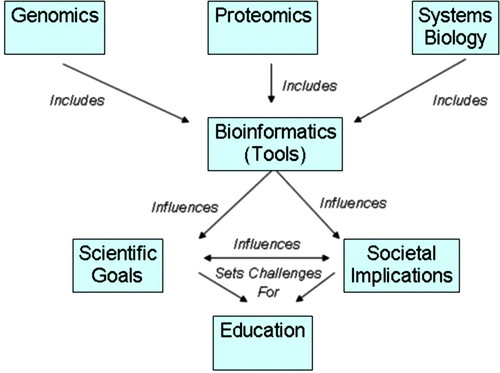
Figure 1. How bioinformatics creates new challenges for education.
ACKNOWEDGMENTS
We wish to thank Dr. O. Roger Anderson and Dr. Harmen Bussemaker, Columbia University, for their advisement and expert advice in the areas of science education and bioinformatics, respectively. We are also grateful to the reviewers and editors of this essay for their suggestions.