From Genes to Proteins to Behavior: A Laboratory Project That Enhances Student Understanding in Cell and Molecular Biology
Abstract
In the laboratory, students can actively explore concepts and experience the nature of scientific research. We have devised a 5-wk laboratory project in our introductory college biology course whose aim was to improve understanding in five major concepts that are central to basic cellular, molecular biology, and genetics while teaching molecular biology techniques. The project was focused on the production of adenine in Saccharomyces cerevisiae and investigated the nature of mutant red colonies of this yeast. Students created red mutants from a wild-type strain, amplified the two genes capable of giving rise to the red phenotype, and then analyzed the nucleotide sequences. A quiz assessing student understanding in the five areas was given at the start and the end of the course. Analysis of the quiz showed significant improvement in each of the areas. These areas were taught in the laboratory and the classroom; therefore, students were surveyed to determine whether the laboratory played a role in their improved understanding of the five areas. Student survey data demonstrated that the laboratory did have an important role in their learning of the concepts. This project simulated steps in a research project and could be adapted for an advanced course in genetics.
INTRODUCTION
Introductory, college-level biology courses in areas of cell and molecular biology must meet the challenge of conveying important core concepts that are integral to various subdisciplines of biology. For example, an understanding of metabolic pathways, the genetic code, the central dogma, mutation, and protein structure/function relationship is critical for accessing fields such as microbiology, physiology, immunology, developmental biology, and evolution. Successful learning of these concepts should enable success in learning the more specialized fields of biology.
Laboratory periods can be instrumental in student learning. For example, in cases in which a laboratory period was added to a lecture course, learning was enhanced and student perception of their learning experience was positive (Caglayan, 1994; Taraban et al., 2007). As noted by Caglayan (1994), one reason for the benefit of student learning in the laboratory may be related to the more active style of learning that can take place, including projects that are inquiry based. Given that many classrooms provide a more passive, lecture-based approach, the addition of a laboratory-based structured inquiry approach may benefit those who are not aural learners. There have been many examples of laboratory-based activities that have improved students’ understanding (Tien et al., 2007; Knight et al., 2008; Rissing and Cogan, 2009).
In our introductory biology course, we instituted a structured inquiry laboratory-based project whose goal was to improve student understanding of the relationships among DNA, protein, and phenotype. The project was integrated and multiweek. In some cases, the particular concepts were introduced in the laboratory and later reviewed in the classroom. In other cases, concepts were introduced in the class period and students would become reacquainted through the laboratory project.
The project was centered around the well-characterized adenine biosynthesis pathway in Saccharomyces cerevisiae, a portion of which is shown in Figure 1. Adenine (in the form of AMP) is synthesized from phosphoribosylpyrophosphate by a series of enzymes encoded by the ADE genes. At two positions of this pathway, a faulty or missing enzyme will give rise to production of a red compound. This pigment is derived from an intermediate, 5’-phosphoribosylaminoimidazole (this compound is also known by the abbreviation AIR; Smirnov et al., 1967; Chaudhuri et al., 1996) that accumulates when the pathway is blocked due to defects in either the Ade1 or Ade2 proteins (Silver and Eaton, 1969). When intermediates AIR or the subsequent intermediate 5’-phosphoribosylaminoimidazole carboxylate (also known by the abbreviation CAIR) accumulate, AIR is oxidized to form a red polymer, which markedly shifts the color of colonies grown in low levels of adenine, such as those grown on the typical rich medium YPD. Because the nature of the pigment and the mechanism of its production is still not completely understood, in our discussion of this pathway with beginning biology students, we typically used the common shorthand that the red pigment was synonymous with the intermediates (AIR and CAIR) that would accumulate just before the blocked step of the pathway in ade1 or ade2 mutants. This simplification is consistent with information that can be found on the webpage describing ADE2 that the students view in the Saccharomyces Genome Database (www.yeastgenome.org).
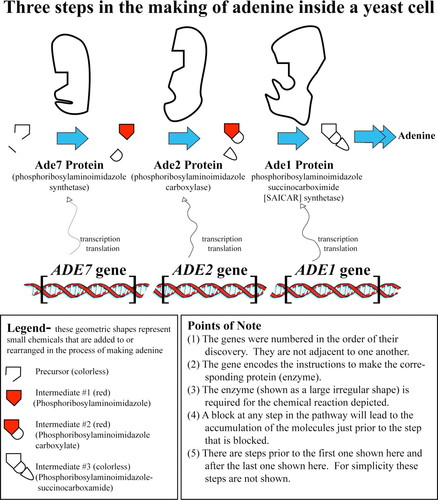
Figure 1. Schematic of a portion of adenine biosynthesis. In a series of steps, only three of which are shown, intermediates, depicted as small shapes, are converted by enzymes, shown as larger shapes, to form adenine. The figure indicates that these enzymes arise from transcription and translation of corresponding genes that are dispersed in the genome. Upon a mutation of the ADE1 or ADE2 genes that causes the encoded enzyme to be nonfunctional, the intermediate before that step of the pathway accumulates, and adenine is not formed. As indicated by the red color, when intermediates AIR and CAIR accumulate, AIR is converted to a red polymer that colors the yeast colonies pinkish red. Intermediates and enzymes in this pathway have several alternative names, which can prove confusing to students and instructors. Some of these are as follows: intermediate 1, AIR or 1-(5’-phosphoribosyl)-5-aminoimidazole or 5’-phosphoribosylaminoimidazole; intermediate 2, CAIR or 5’P-ribosyl-4-carboxy-5-aminoimidazole or 5’-phosphoribosylaminoimidazole carboxylate; and intermediate 3, N-succinyl-5-aminoimidazole-4-carboxamide ribotide (SAICAR) or 5’P-ribosyl-4-N-succinocarboximide-5-aminoimidazole or 5’-phosphoribosylaminoimidazole succinocarboxamide. Thus, the Ade2 protein is also called AIR carboxylase and the Ade1 protein is called SAICAR synthetase. One should also note that in humans these two functions are found in a single bifunctional enzyme, so the human gene PAICS is listed as encoding both phosphoribosylaminoimidazole carboxylase and phosphoribosylaminoimidazole succinocarboxamide synthetase. Students received two versions of the figure; in the first version the three genes and their encoded enzymes are referred to generically as A, B, and C to avoid confusion about the nonsequential gene numbering while the students formulated ideas about the genesis of the red pigmentation. The figure shown here is the second version, modified slightly for improved clarity. In this second version, the actual names of the genes and proteins are used, with the exception of ADE5,7. This gene encodes a bifunctional enzyme that operates at two distinct steps of the pathway, only one of which (the Ade7 step) is shown here. Thus, for simplicity we refer to this gene and protein as ADE7 and Ade7 in the figure. The enzymes have several different names; we chose to use the simplest name or the name(s) that students would encounter during the project.
A flowchart of the activities for each week of the project is shown in Figure 2. In brief, students mutagenized a “white” wild-type strain of the yeast S. cerevisiae by using UV light. Most of the resultant colonies seemed normal, but rare red colonies were observed. Students then characterized differences between the red and white strains by examining the nutritional requirements for the white strain of yeast compared with the nutritional requirements of the red strains of yeast. Students then isolated DNA from one of the red yeast strains. The DNA was subsequently used in two polymerase chain reactions (PCRs), one to amplify the ADE1 gene, the other to amplify the ADE2 gene. Students analyzed the electropherograms of the DNA sequencing reactions of the PCR products. This allowed students to determine whether there had been a mutation in either of the two genes. Students were then asked to explain the molecular basis of the red colonies.
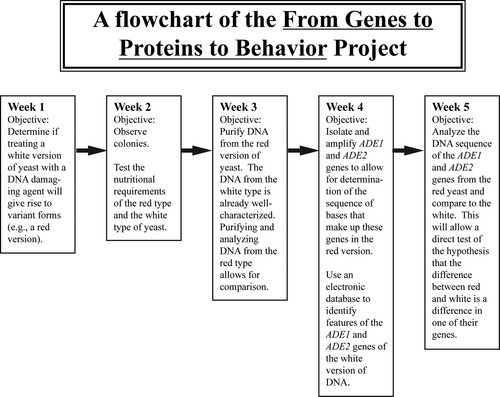
Figure 2. Flowchart of experimental objectives. Each box represents the laboratory objectives for one lab meeting. Students were given this flowchart to aid their understanding of how each week's experiment related to the overall sequence of steps toward the goal of determining the molecular nature of the change that produces red yeast.
We have titled this lab project “From Genes to Protein to Behavior” to highlight the important role of the central dogma and the understanding that changes in the sequence of a gene can alter an overt phenotype. In this particular case, “behavior” was meant to denote the change in the color of the colony of cells. We formulated five content-oriented goals around which we focused our assessment of this project. After completion of the project, we intended that students understand the following:
Compounds (such as adenine) are made by a series of biochemical reactions, and each of the reactions are catalyzed by an enzyme (metabolic pathway objective).
Enzymes are composed of amino acids, the order of which are specified by nucleotides in genes (genetic code objective).
Enzymes arise via transcription and translation of genes (central dogma objective).
Changes in a gene's nucleotide sequence can thus lead to a change in the amino acid sequence of the encoded enzyme (mutation objective).
Changes in the amino acid sequence of an enzyme can lead to changes in the shape of the enzyme, and changes in the shape can lead to an inability of the enzyme to function (protein structure/function objective).
In short, in developing their understanding about the specific example before them—the molecular basis for the color change observed after UV mutagenesis of yeast—we hypothesized that students would draw on and master the five core concepts outlined above.
Whereas these learning goals were the primary objectives of the project, there were clearly additional gains to be made by implementing the project. For example, one recommendation for biology education (National Research Council, 2003) is to incorporate the informational sciences into the biology curriculum. As part of an introductory course, this project was likely the first time in which students used biology databases that helped them to address a hypothesis. Thus, the project promoted awareness of the importance of informational sciences in the pursuit of biological knowledge. In addition, students learned important technical skills, including useful microbiological skills (sterile technique, single colony isolation, nutritional testing) and molecular biological skills (DNA isolation, PCR, agarose gel electrophoresis, and interpretation of electropherograms). Finally, although this was not an open-ended, investigative project, it did mimic a research project. Special attention was given to the development of a hypothesis after an original observation and then formulating ways to test the hypothesis. Students experienced science not as a single 3-h pursuit but as an ongoing series of tests to address a hypothesis.
To determine whether student understanding in the five concept areas had improved they were given a pre- and postquiz that consisted of true/false questions. Each of the five concept areas had 10 or 11 questions. Because any evidence of learning of these concepts could be attributed to classroom exposure, the laboratory project, or some proportion of each, we also measured student perception of the value of the laboratory project in learning these concepts. The precourse, postcourse quiz for each of three cohorts (over 3 yr) demonstrated that students had improved significantly in the understanding of each of the five concept areas. From both Likert-based survey questions, and more open-ended survey questions, it was clear that students felt that the laboratory period had an important role in their understanding of the concepts. Even in cases that students felt that the lab period posed difficulties, they noted that there were intellectual gains that were made. In a survey question, students agreed that the project had taught them useful laboratory skills and many cited learning new techniques as one of the best aspects of the project.
THE LABORATORY PROJECT
The Laboratory Period
This project was used in the first course of our two-semester introductory biology series. The first course covers genetics and molecular and cell biology (the second semester includes topics in physiology and ecology). Most students in the course were second semester freshmen intending to major in biology, although there were also prehealth professional students, environmental studies students, and a small number who chose to take the course as an elective. The course typically enrolled ∼80 students, with each lab section composed of 16–18 students. Students worked on the project in pairs. The project was conducted over the first 5 wk of a 12-wk course, with one 170-min lab session per week. A portion of time at the beginning of most lab periods was used for the students to review the results of the previous weeks’ experiment, to promote an understanding of background material for the current experiment, and to give technical advice. Students were given protocols in a lab manual at the start of the course. These protocols are available in the Supplemental Material 1_Lab Manual.
Students were assumed to have no laboratory experience at the outset of the project. All needed laboratory skills were taught during the laboratory periods. The simplicity of the project was such that standard microbiological techniques, sterile technique, and pipetting (including micropipetting) were the only skills that need to be taught. Furthermore, supplies and reagents were relatively inexpensive and readily available. The project should be scalable to larger classes with computer access a potential limiting factor.
Laboratory Materials
A useful resource for how to culture S. cerevisiae and the use of this organism for demonstrating many different biological principles can be found at www.phys.ksu.edu/gene/chapters.html (Manney, 2001). The exercises described here also center around the use of red adenine mutants and thus the website is a useful resource for our project.
Yeast Strains and Culture Materials. Yeast strains HAO (MATa), HB1 (MATα, ade1), and HB2 (MATα, ade2) were purchased from Carolina Biological Supply (Burlington, NC). Because white colonies (some of which were Ade+) frequently arose from HB1, an effort was made to choose red colonies during strain preservation and use. In more recent years, we have used ATCC strain 42244 (American Type Culture Collection, Manassas, VA; www.atcc.org) as the ade1 strain. It seemed to be genetically more stable although again we initially needed to choose colonies that were stably red. Once a good isolate was obtained, it was frozen at −70°C in 15% glycerol to preserve it indefinitely.
Because the red pigment is moderately toxic to yeast (Montelone, 2001), the red strains are at a growth disadvantage. Thus, if stocks are maintained on plates for significant amounts of time white mutants form. This can be minimized by lowering the accumulation of red pigment by adding adenine to the plates (Montelone, 2001). Adenine supplementation is not desirable on plates that students will use, however, because students will need to see the red color of the strains.
Strains RJD539 (BF264-15D background, MATa, ade1 his2 leu2 trp1 ura3) and SEY6211 (MATa, leu2–3,112 trp1-1 ura3-52 his3-Δ200 trp1-Δ901 ade2–101 suc2-Δ9 GAL;Robinson et al., 1988) were obtained from Ray Deshaies (Caltech, Pasadena, CA). These strains were used to generate the sequence data and should not be needed by others.
Rich medium (YPD) was 2% Bacto-peptone, 1% Bacto-yeast extract, and 2% glucose. Minimal medium (synthetic dropout, SD) was 0.67% Difco yeast nitrogen base without amino acids, with ammonium sulfate and 2% glucose. Minimal plus adenine medium was made by supplementing minimal medium, after autoclaving, to 40 μg/ml adenine by using a 4-mg/ml filter-sterilized adenine stock. If addition of other supplements is desired, appropriate concentrations can be found in Ausubel et al. (1993). Solid medium contained 2% Bacto-agar. Reagents for making media were manufactured by BD Biosciences (Franklin Lakes, NJ).
Molecular Biology. The DNeasy kit (QIAGEN, Valencia, CA) was used for isolation of genomic DNA. Lyticase for cell wall removal was obtained from Sigma-Aldrich, St. Louis, MO (catalog no. L5263) and diluted to 20 U/μl in water. This enzyme solution was stored in aliquots in the freezer. We used a fresh aliquot for each lab section. PCR was done using GE PuReTaq Ready-to-Go PCR beads (GE Healthcare, Piscataway, NJ). Primers for the ADE1 and ADE2 genes were made by Integrated DNA Technologies (Coralville, IA; www.idtdna.com). The sequence of these primers is as follows: the ADE1 set was ADE1f: GCATTGCTTACAAAGAATACACATACG and ADE1r: GGCGACTTGTAGTATATGTAAATCACG at 10 pmol/12.5 μl and the ADE2 set was ADE2f: AGTTGGTATATTAGGAGGGGGACA and ADE2r: GCTTCGTAACCGACAGTTTCTAAC at 10 pmol/12.5 μl. Reactions were incubated at 95°C for 4 min and then subjected to 35 cycles of 1.5 min at 92°C, 1 min at 45°C, and 2 min at 72°C, followed by a final step of 5 min at 72°C.
We provided students with sequence electropherograms rather than have the students generate their own. To generate sequence data, we used the DNeasy kit to isolate DNA from the ade1 and ade2-101 strains. Gel purified PCR products of ADE1 and ADE2 genes generated by the primer pairs shown above were sent to Cal State Northridge (www.csun.edu/∼ds10467/) and sequenced. From this material, two data sets were generated. One data set contained electropherograms of the missense mutation of the ade1 allele and the wild-type version of the ADE2 gene of RJD539. To generate these sequence data, primers ADE1r and ADE2mr (TGATCTCAAATGAGCTTCAAATTG) were used. These sequence files are included in the Supplemental Material (Supplemental Material 2_ade1 Missense Sequence File; Supplemental Material 3_ADE2 Sequence File). Several places in the ADE1r sequence file were manually edited to resolve ambiguities; these edits were at positions 248, 347, and 465 of the electropherogram. The second data set that was generated contained electropherograms of the wild-type ADE1 gene and the nonsense mutation of the ade2 gene of SEY6211. To generate these sequence data, primers ADE1f and ADE2f were used. These files are also included in the Supplemental Material (Supplemental Material 4_ADE1 Sequence File; Supplemental Material 5_ade2 Nonsense Sequence File). As described below, we used an edited version of the ade2 sequence; this edited version is provided (Supplemental Material 6_ade2 Nonsense Edited). Note that the lab manual provided as Supplemental Material 1_Lab Manual asks the students to use the Missense Sequence Files. The details of the instructions in the lab manual changed if the Nonsense Sequence Files were used. The sequence analysis lab protocol varied slightly depending on which set of files was used in the analysis. We have provided both protocols in the Supplemental Material. The protocol for the nonsense sequence files is found in Supplemental Material 7_Nonsense Protocol.
Lab Period 1: Generation of Red Mutant Strains of Yeast
A wild-type white yeast strain (HAO) was inoculated in YPD and grown at 30°C overnight with shaking. The optical density (OD)600 of the culture was assessed with a spectrophotometer set to 600 nm; the OD600, a result of light scattering, was determined from the absorbance scale. A typical density is an OD600 of 10, which corresponds to ∼108 cells/ml. Because light scattering is less linear than absorbance, for an accurate determination of density an aliquot of the culture was diluted so that the instrument reading was in the range of 0.1–0.3.
The overnight culture was diluted 2000-fold in sterile water and divided into 2-ml aliquots before it was given to the students. Students used the diluted culture to make spread plates on YPD. Students spread 0.1 ml of the diluted culture, so each plate received several thousand cells. To ensure consistent numbers of cells per plate, students were instructed to vortex the culture immediately before pipetting the cells each time, as yeast cells can settle quickly. A Stratalinker (Stratagene, La Jolla, CA) was used to deliver measured doses of UV light without exposing the operator, but in principle any UV light source could be used. Doses were selected so that colony numbers ranged from thousands at the lowest doses to <10 at the higher doses. Students were reminded to remove the lids of the Petri dishes to allow for UV exposure and to immediately replace them to limit contamination. Plates from several student pairs were processed simultaneously to speed up the process. As each exposure took only a few seconds, we did not have difficulty using one Stratalinker for two laboratory sections. Each student also prepared a control plate that was not exposed to UV light. This gave each lab pair two baseline samples. As students diluted the control culture 10-fold before plating, the control also gave each student an opportunity to practice transferring liquids between tubes while maintaining sterility. This further dilution yielded several hundred colonies on the control plates for easier and more accurate counting in the next lab period. Students were reminded to account for this additional dilution when analyzing their data.
The red color took several days to develop after the initial appearance of colonies. For simplicity, we generally left the plates at room temperature for most of the week, although colonies will grow faster at 30°C. A more dilute formulation of YPD (Hamilton, 1996) should lead to lower adenine concentrations and hence stronger color development. We have not tried this formulation ourselves.
Because this was the first laboratory period in the course, we did not assume students were acquainted with pipetting, vortex mixing, or sterile technique. Students practiced the necessary pipetting skills before working on the mutagenesis by using a procedure similar to that described by Hebrank (2001) at www.biology.duke.edu/cibl/exercises/virus_tracker.htm. This activity also served to introduce the students to one another. The activity mimicked the spread of an infectious disease in a population. Students were given unlabeled tubes of either water or 5% sodium carbonate. Only one or two students were given the sodium carbonate “disease.” Students mixed their solutions with those of other students by pipetting them together and redistributing the mixture to the two original tubes. After three rounds of such intermixing, exposure to the sodium carbonate “disease” was detected by adding a few drops of phenolphthalein to each tube. After the lab students were encouraged to trace the original source of the “disease.” After students completed the exercise, they were shown how to pipet by using sterile technique.
Because students lacked the necessary background at this stage (in some cases, there had been only one class meeting), the full project was not presented at the time of this lab. Students were asked the possible outcomes of exposing cells to UV light based on their own previous experiences. In the subsequent lab period, they observed the outcome, compared the outcome with their predictions, and proposed ideas for the underlying basis for the observed outcome.
In preparation for purifying any red mutant strains obtained in the mutagenesis (an outcome that they may not predict), students also practiced streaking out a culture containing a mixture of red and white yeast strains. This culture was prepared by mixing liquid YPD overnight cultures of HAO (white) and HB2 (red). To avoid mix-ups, this mixed culture was made unavailable to students while they prepared their mutagenesis plates.
Lab Period 2: Characterizing Red Strains
Examining the Results from Mutagenesis. The first part of this laboratory period was devoted to examining the results of the mutagenesis. Because most students in our course were novices in the lab, there were a few things of which to be aware. Pipetting skills varied widely among different groups, so the number of colonies observed between groups exposed to the same conditions varied greatly. After only a short observation period, we asked the students to propose at least one effect that the UV light had on the growth of yeast. The decrease in the number of colonies was quite stark and most students correctly suggested that this represents one effect of the UV light. Students were not always able to realize that this decrease in colony number reflected cell death and hence the inability to divide to form a visible colony, so this point was clarified. The students were then asked to compile quantitative data that showed the relationship between UV dose and the number of colonies. Students used a Sharpie to mark the back of the Petri plate over each colony that had been counted to aid in counting each colony only once. Colony count results for each plate were typically posted in a table on the blackboard so groups could compare their own data with other groups. The results were also posted on the course website so they were easily available to students later in the course. During the lab period students displayed their results in tabular form, but in their lab reports at the end of the project they created graphs similar to that shown in Figure 3, which shows a representative kill curve. Table 1shows the summary data of a number of different lab sections over the three cohorts examined in this publication.
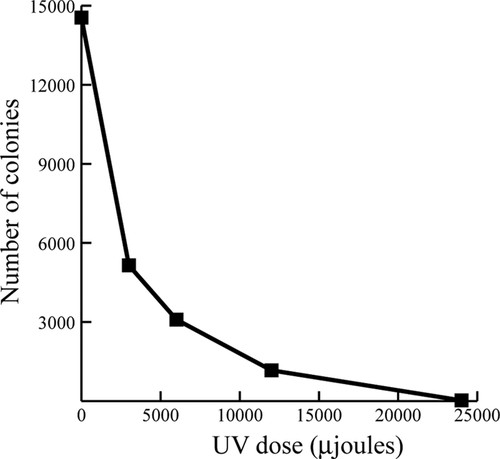
Figure 3. Yeast cell survival after UV irradiation. Cells spread on YPD plates were irradiated with 0, 3000, 6000, 12,000, and 24,000 μJ of UV light and then allowed to form colonies. The number of colonies at each level of radiation was assessed, and averages of a typical lab section's colony counts were used to generate the graph. Students created similar graphs for their lab reports using their own data.
| Lab section | Total no. mutagenized colonies screened | No. red colonies | Red colonies/total colonies | No. of student pairs in lab section | Fraction of student pairs with red mutant(s) |
|---|---|---|---|---|---|
| 2004-1 | 84,891 | 3 | 3.5×10⁻⁵ | 10 | 0.20 |
| 2004-2 | 68,679 | 3 | 4.4×10⁻⁵ | 7 | 0.43 |
| 2004-3 | 80,847 | 4 | 4.9×10⁻⁵ | 8 | 0.25 |
| 2005-1 | 56,606 | 9 | 1.6×10⁻⁴ | 6 | 0.67 |
| 2005-2 | 71,173 | 20 | 2.8×10⁻⁴ | 7 | 0.86 |
| Avg. | 1.1×10⁻⁴ | 0.48 |
The possibility of the character (morphology) of a colony being altered after UV exposure was sometimes raised by a student but could also be raised by the instructor. In this light, it was suggested that students reexamine the Petri dishes for any evidence of such a change. We have typically hinted quite strongly, and it was implied in the laboratory manual, that one of the things to be on the lookout for is red colonies. Students needed to be encouraged to look carefully as there was typically an underreporting of the number of red colonies. The underreporting came from a lack of careful scrutiny of the Petri dishes. Red colonies are usually smaller than white colonies because they are at a growth disadvantage on YPD plates because the availability of adenine can become limiting, and the red pigment is moderately toxic (Montelone, 2001; Ishiguro, 1989). They were frequently found partially obscured by white colonies. In addition, students often did not appreciate the low frequency with which red colonies may occur. As well as underreporting, there was occasionally overreporting of red colonies. This stemmed from students including in their data set contaminants that formed red colonies. Colonies could usually be identified as contaminants by observation under the microscope. It is our experience that one-quarter to one-half of the laboratory groups observed at least one bona fide, mutant, red yeast colony under the UV doses and procedures that we used (Table 1). The mutation rate (and the survival rate) depended on the UV dose used. Overall, our rate for obtaining red colonies was around one in every 10,000 UV-treated colonies screened.
Students added the data regarding the number of red colonies observed on each plate to the table of colony number versus UV dose already on the board. Students noted, or were guided to note, that the red colonies, although rare on UV-exposed plates, did not occur at all on control plates, which was consistent with such colonies resulting from UV light exposure. The class also discussed that, given the overall scarcity of the red colonies, their absence from the control plates only became significant after the data for each group were pooled. Students were also asked to speculate as to why many fewer cells turn red, as opposed to dying, after UV exposure. Typically, at least one student proposed that there are many ways UV might “break” a cell, leading to its death, but relatively few ways to generate a specific alteration, such as color change. This reminded students that many types of alterations are occurring as a result of UV treatment and that sometimes different alterations had similar outcomes, such as cell death. This reinforced the idea that in our project, we were focusing on one particular outcome among many possible outcomes.
Lab groups that had a red colony after mutagenesis were asked to streak the red colony for later characterization. It sometimes took several rounds of streaking to get a pure red culture—frequently the red colony was embedded in the environment of many white colonies. Lab groups that did not observe a red colony used a red colony from another lab group to do the restreaking.
Examination of the Synthesis of Adenine. Students were next shown a drawing such as the one in Figure 1 (we actually used a simplified version of this, see Supplemental Material 1_Lab Manual). This drawing was considered data that the students should mine for an understanding of how it might be possible that UV light could result in the formation of occasional red colonies. The figure played a central role for the remainder of the project. A series of critical-thinking questions were provided to the students that should help them form an understanding of what each of the different symbols in the diagram represented (see Supplemental Material 8_Student Exercises; From Genes to Proteins to Behavior [FGPB] inquiry). At this point in the semester, students had been given a basic description of the structure and role of DNA in the cell. The questions culminated by leading the students to formulate a hypothesis that was consistent with the diagram and would explain the presence of the occasional red colonies after UV exposure. It was typical that one suggested hypothesis centered around the following: the red colonies are the result of damage to specific regions of the DNA that prevent the production of an enzyme that is required to make the chemical adenine. The students typically suggested other hypotheses, and the relative strengths of each hypothesis were debated by the students. At the end of the discussion, the instructors stated that the hypothesis mentioned above would be used as the one to be tested. It was then noted that the next three weeks would be used to determine the validity of the hypothesis. A discussion of the type of data that one could collect that would strongly support the hypothesis ensued. By the end of the discussion, two major conclusions were made: 1) if the hypothesis is correct, red colonies should not be able to grow in the absence of adenine but unmutated, parent white colonies should; and 2) there should be a difference in the base sequence of the DNA in the red strains compared with the white strains. Point 1 above led to the rationale for the next experiment.
Testing Red and White Strains for Growth in the Presence and Absence of Adenine. If the hypothesis had validity, it would suggest that the red colonies would not be able to synthesize adenine and would therefore be unable to grow in the absence of adenine in the environment, whereas white colonies should be able to synthesize adenine and would be able to grow in the absence of adenine in the environment. Students determined whether there is a correlation between strain color and requirement for adenine by streaking strains HAO (white), HB1 (red), and HB2 (red) on various solid media. Because in our hands HB1's red color and adenine auxotrophy was unreliable, we frequently substituted other red strains for HB1 when possible, provided that they would grow on minimal plus adenine medium (i.e., there were no other auxotrophies). Available media were minimal medium and minimal medium plus various supplements, in particular minimal medium plus adenine. Once the red strains from the mutagenesis experiment had been purified in a subsequent lab period, students also tested the growth characteristics of these strains. These red strains represented independent tests of the correlation between the red mutant phenotype and inability to grow in the absence of adenine.
Students were reminded to streak only a moderate number of cells (a fraction of a colony). Most difficulties in interpreting the results from these tests arose when students gathered many colonies on the inoculating loop for spreading on the nutritional testing plates.
Lab Period 3: Isolation of DNA from a Red Yeast Strain
A second point that was established in the discussion of hypothesis testing in the previous week was that if the hypothesis is correct, there should be a difference in the base sequence in the red strain compared with the white strain. To test whether this was indeed the case, it was necessary to obtain DNA from a red strain—the goal of the third laboratory period meeting. In our case, to simplify matters, we used a single representative red strain for this and all future experiments, but in a smaller and more advanced course one could use student-generated strains. The red strain (typically RJD539 or SEY6211, although HB1, HB2, or ATCC42244 could be used) was inoculated in a small amount of liquid YPD and grown overnight at 30°C with shaking. This culture was refrigerated and used for multiple lab sections. The night before lab, new cultures were prepared by diluting a portion of the overnight culture 1:20,000 in YPD. This diluted culture was grown for 19 h at 30°C with shaking. Approximately 30 min before lab, the OD600 of the culture was measured with a spectrophotometer set to 600 nm. A volume of the culture containing 2.5 OD600 units (typically ∼10 ml) was given to each student pair. These cultures were stored on ice until distributed to the students.
Students isolated genomic DNA from the cultures using a DNeasy kit (QIAGEN) as per manufacturer's instructions for yeast samples. To fit the procedure into a 3-h lab period, we started the DNA isolation promptly at the beginning of the period. Spheroplasting (cell wall removal) and proteolysis incubations provided convenient times for the students to review results from the previous laboratory period and to explain the principles behind the isolation of DNA that was ongoing. At the end of this laboratory period, lab groups had a sample that contained genomic DNA from the red yeast strain. The samples were stored at −20°C until the subsequent lab period when the sample was assayed for the presence of DNA.
When students observed the results of the nutritional requirements from the previous lab period, it was useful to help the students in scoring growth versus no growth. Cases in which there were just a few moderate-sized colonies represented isolated reversion events and were scored as no growth. Cases in which there was slow growth but only in areas of high cell density were also scored as no growth. Class data were collected and displayed so that the “typical” results could be seen. It was usual that one or two lab groups had data inconsistent with the majority of the lab groups.
We had each lab group post their results of the nutritional requirements on the blackboard (and we later posted these on the course website) and used the consensus to draw conclusions. The students then considered whether these conclusions were consistent with the hypothesis being tested or whether the results contradicted the hypothesis.
Lab Period 4: Detection of Genomic DNA; PCR Amplification of ADE1 and ADE2 from the Genomict DNA
Detection of Genomic DNA. Samples from the previous laboratory period were assayed for the presence of DNA by agarose gel electrophoresis. Students loaded 15 μl of the DNA sample per lane. One student in the lab pair loaded the DNA sample and the other student loaded a molecular weight marker. During the electrophoresis, a 10- to 15-min lecture on the physical principles of electrophoresis was given. By the end of the laboratory period, the electrophoresis was completed and students examined the results first hand. We have also used a gel documentation system to provide images of the gel to the students. Figure 4shows a variety of results that were obtained. In many cases, high-molecular-weight DNA was observed. It has been very rare that lab groups did not observe any evidence of nucleic acid in their samples, although in some cases it was not of high molecular weight. Even in cases in which there was no high-molecular-weight DNA visible, the subsequent PCR step (see below) typically succeeded.
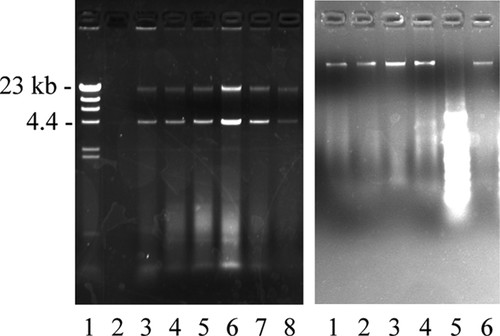
Figure 4. Yeast genomic DNA preparations. Students isolated genomic DNA from a representative red ade strain and ran 15 μl of their 400 μl preparation on a 0.8% agarose gel. Two gels from different lab sections were selected here to illustrate the variety of outcomes obtained by the students. Sizes of molecular size standards (lane 1, left) are indicated. Many genomic DNA samples yielded a high-molecular-weight band (lanes 1–4 and 6, right), but some displayed two bands (lanes 3–8, left). Occasionally, lanes with degraded DNA (lane 5, right) or no DNA (lane 2, left) were seen. Subsequent PCR was usually successful in all of these cases.
Polymerase Chain Reaction. A discussion of the two tests of the hypothesis reminded students that although the first test of the hypothesis (determination of nutritional requirements of red and white yeast strains) had been done, the second test (comparison of the DNA sequence between red and white yeast strains) was yet to be done. The students were told that to be able to detect the sequence of bases in a DNA sample, there must be many copies of the segment of DNA under investigation and that the technique that allowed for the production of many copies of DNA is called PCR. Students were provided with an overview of the technology (Dolan DNA Learning Center; www.dnalc.org/ddnalc/resources/pcr.html) and then provided a guided inquiry worksheet to learn the principles of PCR before doing PCR on samples to amplify both the ADE1 gene and the ADE2 gene. This worksheet is included in the Supplemental Material 1_Lab Manual. At this point in the course students had already been introduced to the topic of in vivo DNA replication.
Amplification of the ADE1 and ADE2 Loci by PCR. As a preliminary step to determining the sequence of the ADE1 and ADE2 loci in a representative red strain, students amplified the loci by using PCR. This step also allowed them to assess whether any large deletions or insertions were present (however, we have chosen alleles that have point mutations). To minimize pipetting errors, we used PureTaq Ready-to-Go beads from GE Healthcare and arranged for students to add the primers (provided as a mix of each pair) and DNA in equal volumes (12.5 μl each); this minimized the chance for gross pipetting errors, especially if the only micropipettors available were those with the appropriate range. Each student pair established two reactions, one with each primer set. The samples were then placed into the thermocycler programmed to the conditions noted in the Laboratory Materials section. Although they were one of the major expenses of the project, we strongly recommend the Ready-to-Go beads or similar product. Successful PCR amplification occurred roughly 95% of the time, a startlingly high rate for molecular biology novices. In addition, even lab groups that did not recover visible amounts of genomic DNA generally had successful PCR reactions.
Analysis of the ADE1 and ADE2 Gene from the White Yeast Strain. The goal of isolating genomic DNA and doing the PCR reaction was to determine the sequence of bases in the ADE1 and ADE2 genes of the red yeast and to compare this sequence to the sequence of bases of the ADE1 and ADE2 genes of the white yeast. Students were introduced to the Saccharomyces Genome Database (SGD; www.yeastgenome.org) in this lab period, before examining sequences derived from red strains in a subsequent lab period. The purpose of this first computer session (another more intensive session is in the fifth lab meeting) was for students to 1) become familiar with how sequences are displayed, 2) recognize that the sequences of the ADE1 and ADE2 genes from a wild-type (“white”) strain are already known, 3) note the lengths of each gene for later comparison with the size of the products obtained in PCR, 4) understand how to obtain the amino acid sequence of a protein from the DNA sequence of the gene, and 5) learn about the roles of the ADE1 and ADE2 genes based on annotations in the database. To meet these goals, students examined the SGD records for the ADE1 gene (http://db.yeastgenome.org/cgi-bin/locus.pl?locus=ade1) and the ADE2 gene (http://db.yeastgenome.org/cgi-bin/locus.pl?locus=ade2). One of each pair of students examined the ADE1 gene, whereas the other examined the ADE2 gene (although students still worked in pairs, they shuffled partners with another lab group). In this exercise and in the subsequent red strain sequence analysis, we have found this division of labor between lab partners to be critical in keeping the students from being overwhelmed by the sequence information and frustrated by the repetition of the various steps.
Lab Period 5: Analysis of PCR Products; Comparison of Nucleotide Sequence of ADE1 and ADE2 in Red versus White Strains of Yeast
Analysis of PCR Products. Presence of PCR products and characterization of their sizes were examined by agarose gel electrophoresis in this laboratory period. Students loaded 15 μl of each reaction per lane. Although this usually resulted in overloaded lanes, loading the same volume as in the DNA isolation gel allowed students to easily see that the PCR had indeed increased the concentration of DNA in the sample, as well as changing the molecular weight of the DNA relative to the genomic DNA observed the previous week. Students estimated the molecular weight of the products and compared these against the sizes reported for the ADE1 and ADE2 loci that they obtained the previous week from the SGD. Examples of PCR results are shown in Figure 5.
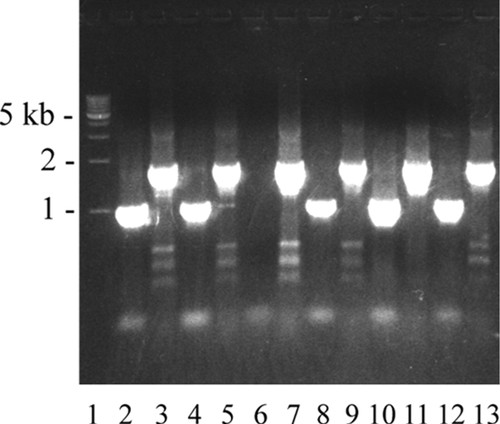
Figure 5. Amplification of ADE1 and ADE2 from red yeast. Students used their red strain genomic DNA preparations as a template for PCR amplification of ADE1 and ADE2 and loaded a portion of the reaction products on a 0.8% agarose gel. Although the reactions shown here used template from genomic preps analogous to those shown in Figure 4, they were not derived from those particular preps. The gel was deliberately overloaded; the same volume (15 μl) as was used in the genomic DNA prep was loaded to emphasize that the DNA in this sample had become much more concentrated than that in the genomic prep. ADE1 PCR products were loaded in even numbered lanes, ADE2 in odd numbered lanes, with the exception of lane 1, which contained molecular size standards. The sizes of relevant standards are indicated. The predicted sizes of the ADE1 and ADE2 products are 989 and 1683 base pairs, respectively. In a majority of cases, all reactions were successful. In this example, which represents six of the eight student pairs in a typical laboratory section, all reactions yielded product except for the ADE1 reaction loaded in lane 6.
Characterization of Mutant ade2 and ade1 Allele Sequence. To minimize confusion, we selected in advance good quality sequence data from a strain we had on hand and gave these data to all the students. Should each student pair analyze sequence data from their own mutant we foresee several potential sources of difficulty. First, data from sequence reactions often contain ambiguities. In our experience, beginning students find sequence analysis difficult enough even when the data lack ambiguities, so we wanted to present them with a clear-cut case to analyze. Second, the genes, especially ADE2, are long enough to require assembly of data from multiple sequence reactions and again, we wished to give students a simplified case where they would examine only one set of sequence data per locus to find the mutation. Finally, if we had allowed each student pair to analyze their own mutant, we would have had a large number of gel purifications and sequencing reactions to manage in a short time period, and the cost would have been significant. However, with more advanced students and a smaller class size it would be possible to have the students analyze their newly generated strains. In our case, as in the DNA isolation lab, students were told that the sequence was from a representative red strain and that it was devised from a PCR reaction analogous to their own.
We created two data sets by sequencing both the ADE1 and ADE2 loci from RJD359 and SEY6211, containing the ade1 missense and the ade2 nonsense mutations, respectively. Each year, we use one data set, providing students with two electropherograms derived from a single strain; one electropherogram is for the ADE1 locus and the other electropherogram is for the ADE2 locus. In each case, one electropherogram contained the sequence of a wild-type allele and the other electropherogram displayed the part of the other gene that contained a mutation. To minimize students working from previous students’ lab reports, we alternated the two data sets year by year. These data sets are available in the Supplemental Material 2–6, as noted previously.
Analysis of ADE1 and ADE2 DNA Sequences from Red Yeast. Before coming to lab, students completed a homework exercise (available in the Supplemental Material 1_Lab Manual) that familiarized them with the concept of an open reading frame, the output of ORF finder in DNA Strider and the output of basic local alignment sequence tool (BLAST; Altschul et al., 1990). We have found this “on-paper” preparation for the computer-based laboratory to be critical. Otherwise, students have had difficulty interpreting what they saw on the computer screen, believing, for example, that vertical lines in a BLAST alignment represented base pairing, rather than points at which the two sequences matched. After completing the homework assignment, students should be able to find interruptions in an open reading frame and use a BLAST alignment to detect any differences between the compared nucleotide sequences.
In the first part of the laboratory period, emphasis was placed on how the sequence of bases in a DNA sample can be deduced. Students answered critical-thinking questions about DNA sequencing reactions that demonstrated how the DNA sequence data that they would be given was generated. (This exercise is provided in the Supplemental Material 8_Student Exercises; DNA sequencing.) A Cold Spring Harbor Laboratory animation on DNA sequencing was then shown. This animation can be found at www.dnalc.org/ddnalc/resources/animations.html.
In the computer lab, students were given a CD with a copy of one of the two electropherogram-based data sets. The lab manual included in Supplemental Material 1 was written for the Missense Sequence Files. The CD also contained the programs DNA Strider (Marck, 1988) and Editview (Applied Biosystems, Foster City, CA). For Windows machines or Macintosh machines running OSX, alternative programs such as Finch TV (Geospiza, Seattle, WA) and Lasergene (DNASTAR, Madison, WI) can be used for viewing electropherograms and manipulating sequences, respectively. Both of these are available without cost (DNASTAR allows for a free site license for educational users). Alternatively, 4peaks (http://mekentosj.com/science/4peaks) is freely accessible Mac-compatible software that allows for viewing of electropherograms, as well as DNA translation, and other sequence analyses. Within a sequence file, we asked the students to look only at the unambiguous part of the sequence, explaining that the sequence at the beginning and end was unreliable. If necessary, we asked them to resolve a few ambiguities by using information we provided, for example, sequence from the opposite strand. From our experience, however, this proved distracting and confusing to the students, and providing students with files in which these ambiguities were already resolved was most straightforward.
When we used the ade2-101 sequence additional issues arose. The key mutation in the ade2-101 allele is a nonsense mutation because the red phenotype is ochre suppressible (Hieter et al., 1985). This is also true for the ade2-1 mutation (the red phenotype and the Ade− phenotypes are both suppressible by an ochre suppressor; Hawthorne and Mortimer, 1968; Olson et al., 1979). After sequencing this allele from SEY6211, we found several sites at which this sequence differs from the wild-type sequence in the SGD, four of which would be seen in the sequence run we gave the students. Three of these four differences have subsequently been noted by other researchers for the ade2-1 allele (www.yeastgenome.org/alleletable.shtml; Rothstein, 2005). The polymorphisms we observed in the ade2-101 allele are at coordinates 25, 149, 260, and 331 of the sequence file provided in the Supplemental Material 6_ade2 unedited. These correspond to: codon 23 GCA to GCT (silent); codon 64, GAA to TAA (nonsense); codon 101 AGA to GGA (missense); and codon 124 GTT to GTC (silent). We sequenced the ade2 gene in this region from other strains, including another bearing the ade2-101 allele, one bearing an ade2-1 allele, and another derived from the A364A strain background, and we still saw three differences from the SGD sequence in addition to the nonsense mutation. Not all of these sites are silent polymorphisms/mutations (an AGA/arginine codon occurs as GGA/glycine in our sequence, which would alter amino acid 101 if there were not also an upstream nonsense mutation at codon 64). Based on our DNA sequence information, it is likely that the ade2-1 and ade2-101 alleles are identical, at least in this region.
Because we have seen that it is challenging for students to understand even straightforward sequence analyses, we wished to simplify the case that the students would examine. We edited the text portion of the EditView file so that the other disparities conformed to the sequence in SGD. These alterations are marked by underlining of the base in the Editview electropherogram. Although this led to a somewhat unsettling situation where a few nucleotides did not match the peaks, this in practice went unnoticed by the students, and in the interest of honesty the students can be told that the sequence has been cleaned up for easier analysis. With more advanced students, the file could be left in its original state, allowing students to wrestle with the problem that it is not always clear whether a given alteration is the one that gives rise to a particular phenotype. Because the missense mutation is downstream of the nonsense mutation, students should still be able to reason that the nonsense mutation is acting here. Advanced students might also learn or read about the evidence that the Ade− and red phenotypes are suppressed by an ochre suppressor to determine that the missense mutation alone does not confer these phenotypes.
As in the wild-type sequence exercise in the previous week, each student analyzed either the ADE1 or ADE2 file and then exchanged data with a partner to obtain the information for the other gene. Students found an open reading frame in the ADE1 or ADE2 sequence and compared the nucleotide and derived protein sequences to those in SGD using BLAST. For some parts of the Ade2 protein sequence, it was important to instruct students to turn off filtering (set filtering to “none” on the pull-down menu) during BLAST comparisons. If default filtering was used, part of the sequence was filtered out and a match was not displayed for that region even when no mismatches were present. This was very confusing to the students (and to the instructors). For the benefit of instructors who would like to implement the project we have included the BLAST results in the Supplemental Material 9_BLAST alignments.
RESULTS AND DISCUSSION
Pre- and Postquiz Results
The learning goals of the laboratory project were to increase student understanding in the following five areas: mutation, protein structure and function, genetic code, metabolic pathways, and the central dogma. Students were given a precourse quiz in the first week of the semester and a postcourse quiz that could be taken the last week of the semester through the final exam week. The quiz consisted of 52 true/false questions, each one categorized under one of the five areas. The 52 questions were identical in the pre- and postquiz and the quizzes did not change over the 3 yr. The quizzes were administered online as a low-stakes exercise. No rewards were given for correct answers. Course points were given to all students who simply completed the quizzes. Return rates based on the number of grades assigned in the course were high. We received both precourse and postcourse quizzes for 72 students in 2005, 60 students in 2004, and 75 students in 2003. This represents a return rate of 89% in 2005, 76% in 2004, and 99% in 2003. Some of the variation is due to the instructors not being equally vigilant about reminding students to take the postcourse quiz from 1 yr to the next. In addition, in 2004 there were four students who had to be excluded because of an electronic snafu. A sampling of questions is shown in Table 2. A copy of the complete quiz is included in the Supplemental Material 10_Quiz and Survey.
| Question (true [T]/false [F]) | ||||||||||||||||||||||||||||||||||||||||||||||||||||||||||||
|---|---|---|---|---|---|---|---|---|---|---|---|---|---|---|---|---|---|---|---|---|---|---|---|---|---|---|---|---|---|---|---|---|---|---|---|---|---|---|---|---|---|---|---|---|---|---|---|---|---|---|---|---|---|---|---|---|---|---|---|---|
Central dogma
| ||||||||||||||||||||||||||||||||||||||||||||||||||||||||||||
To determine whether student learning in each of the five subject areas improved over the course of the semester, comparisons between the precourse and postcourse quizzes were done (Table 3). A paired Student's t test was used to determine whether any differences were of statistical significance. For all 3 yr that data were collected (2003, 2004, and 2005), there was a statistically significant increase in quiz score in all five subject areas. These data are summarized in Table 3. The one-tailed p values for any one objective ranged from 3.4 × 10⁻⁴ to 1.1 × 10⁻¹⁸. The highest p values (i.e., values that were closer to statistical insignificance) were typically for subject areas that students seemed to have sound pre-existing knowledge based on high scores on the pre-course quiz. For example, for the “mutation objective,” which had the highest p value, the average prequiz score for the class of 2004 was 75% (8.3 of 11 possible points), whereas the average precourse quiz score for the same class on the topic of the genetic code was 44% (4.8 of 11 possible points, returning a much smaller p value). Thus, the “room for improvement” seems to play a role in the strength of the p value score.
| Subject area | 2003 (n = 75) | 2004 (n = 60) | 2005 (n = 72) | ||||||
|---|---|---|---|---|---|---|---|---|---|
| Pre | Post | p | Pre | Post | p | Pre | Post | p | |
| Central dogma (10) | 59 | 73 | 9×10⁻⁸ | 62 | 85 | 3×10⁻¹¹ | 58 | 85 | 1×10⁻¹⁸ |
| Genetic code (11) | 50 | 64 | 5×10⁻⁸ | 44 | 70 | 1×10⁻¹² | 48 | 75 | 9×10⁻¹⁷ |
| Mutation (11) | 75 | 80 | 3×10⁻⁵ | 75 | 84 | 4×10⁻⁴ | 73 | 84 | 7×10⁻⁹ |
| Protein structure (10) | 58 | 69 | 3×10⁻⁶ | 61 | 76 | 6×10⁻⁷ | 58 | 78 | 1×10⁻¹² |
| Metabolic pathway (10) | 72 | 83 | 1×10⁻⁷ | 69 | 87 | 8×10⁻¹⁰ | 73 | 86 | 3×10⁻⁷ |
| Total (52) | 63 | 74 | 1×10⁻¹³ | 62 | 80 | 5×10⁻¹⁶ | 62 | 81 | 6×10⁻²⁴ |
Student Perception Results. These data suggested that students gained in their understanding of all subject areas defined by the project objectives. These topic areas were, however, covered in other course work as well as in the laboratory. It is possible that the laboratory project had little impact on their increased understanding in the subject areas. To determine the extent to which the laboratory had an impact on student learning of these subject areas, the postquiz contained questions asking students to rate the importance of the laboratory project in their learning. The format of each of the questions was, “The 5-wk project studying the red and white yeast (this project has also been referred to as FGPB) helped me to understand [each of the five subject areas]. Student responses were restricted to integer values on a Likert scale according to the following scheme: 1, strongly agree; 2, agree; 3, neutral; 4, disagree; and 5, strongly disagree.
For each of the three cohorts, the data suggested that the lab had an important impact on their learning of each of the subject areas (Table 4 and Figure 6). For each of the three cohorts, the weakest average Likert-item scores were elicited by the question regarding protein structure and function. The average response to this question in the 2003 cohort was a 1.91 (62/75 responded with a 1 or a 2), for the 2004 cohort the average response was a 2.08 (46/60 responded with a 1 or a 2), and for the 2005 cohort the average response was a 2.08 (54/72 responded with a 1 or a 2), suggesting that even in this subject area, given the weakest scores by students, most students “agreed” or “strongly agreed” that the project helped them understand protein structure/function fundamentals. (One difference between the 2005 cohort and the 2003–2004 cohorts was the addition of an exercise to observe the site of the changed amino acid in the context of the protein structure. This exercise is provided in the Supplemental Material 8_Student Exercises; FirstGlance). Because there was consistency among cohorts as to how they responded, the data shown in Figure 6 represent the sum of all three cohorts.
| Statement | Mean 2003 (n = 75) | Mean 2004 (n = 60) | Mean 2005 (n = 72) |
|---|---|---|---|
| A. The 5-wk project studying the red and white yeast (this project has also been referred to as FGPB) helped me to understand the central dogma—how information “flows” from DNA to RNA to protein. | 2.0 | 2.0 | 1.8 |
| B. The 5-wk project (FGPB) helped me understand how the sequence of nucleotides in a gene provides the information to make a protein. | 1.8 | 1.9 | 1.8 |
| C. The 5-wk project (FGPB) helped me understand how the sequence of amino acids of a protein determines the structure of the protein and to recognize the relationship between the structure of a protein and its function. | 1.9 | 2.1 | 2.1 |
| D. The 5-wk (FGPB) project helped me understand mutation, its random nature, and the relationship between mutation and variation. | 1.6 | 1.8 | 1.7 |
| E. The 5-wk project (FGPB) helped me understand how a series of chemical reactions, each one catalyzed by a specific enzyme, can result in the production of essential “building blocks” of the cell and to understand the consequences of an inability to carry out one of the chemical reactions in the series. | 1.7 | 2.0 | 1.8 |
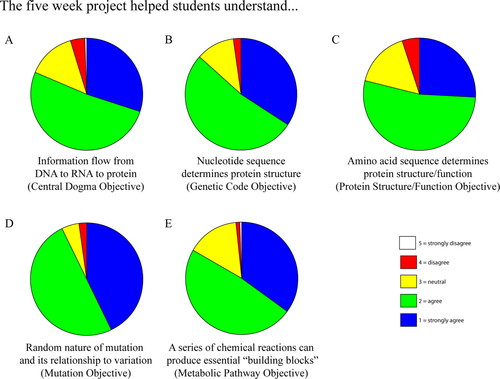
Figure 6. Student evaluation of the contribution of the laboratory project to their understanding of the five key content areas. Students were asked to use a Likert scale (1, strongly agree and 5, strongly disagree) to rate the impact of the lab on their understanding of biological concepts. The statements to which the students were responding had the format “The 5-wk project (FGPB) helped me to understand [description of key content area].” The statements are listed as A–E in Table 4, and the distribution of responses to each of these statements is shown here in a pie chart labeled with the corresponding letter.
Similar to the consistency across cohorts mentioned for the weakest ratings, the strongest ratings for all three cohorts were given to the question regarding mutation. An overwhelming majority of students in each of the cohorts “strongly agreed” or “agreed” that the project helped with their understanding of mutation (in 2003, 71 of 75 students; in 2004, 54 of 60 students; in 2005, 67 of 72 students). This response also showed the most students choosing the “strongly agree” option. For example in 2003, 37 of 75 students responded “strongly agree” to this prompt.
The number of students who responded with a “disagree” or “strongly disagree” to any of these Likert items was very small. Even the number of students responding with “neutral” tended to be rare. There were 12 of 75 students in 2003 and 12 of 72 students in 2005 who responded to the protein structure/function question in this way. This represented the highest proportion of “neutral” responses for any of the Likert items. We concluded from the Likert scale data that the laboratory project had a significant impact on student learning of all five subject areas. Combined with the quiz data, we concluded that students gained in understanding of each of the subject areas and that the laboratory project played an important role in this improved understanding of each subject area.
We also solicited responses regarding the effectiveness of other aspects of the project, in addition to the major content areas. Using the same Likert scale students rated each lab period and other features of the project, such as the use of a model organism, for effectiveness. The responses revealed that students appreciated many aspects of the project, particularly the techniques that they learned and how the project enabled them to see how one can assess the invisible workings of a cell (Table 5).
| Statement | Mean 2003 (n = 75) | Mean 2004 (n = 60) | Mean 2005 (n = 72) |
|---|---|---|---|
| The laboratory period in which we learned sterile technique and other microbiology techniques was helpful in advancing my understanding of biology. | 1.9 | 1.9 | 2.0 |
| The laboratory period in which we exposed yeast to ultraviolet light was helpful in advancing my understanding of biology. | 2.1 | 2.2 | 2.3 |
| The third laboratory period in which we purified DNA from the red strain of yeast was helpful in advancing my understanding of biology. | 1.8 | 2.0 | 1.9 |
| The fourth laboratory period in which the polymerase chain reaction was used to make many copies of the ADE1 and ADE2 genes was helpful in advancing my understanding of biology. | 1.9 | 1.9 | 2.1 |
| The fifth laboratory period in which the computer was used to analyze the base sequence of DNA from the red and white types of yeast was helpful in advancing my understanding of biology. | 2.2 | 2.3 | 2.1 |
| The 5-wk project helped me understand that simple organisms can be studied to understand universal biological problems. | 1.8 | 2.0 | 1.7 |
| The 5-wk project helped me understand how scientists can understand biological processes even when they are too small to see by eye. | 1.6 | 1.8 | 1.7 |
| The 5-wk project helped me learn useful laboratory techniques. | 1.4 | 1.5 | 1.5 |
| The laboratory period in which we did the polymerase chain reaction helped me understand how DNA replication works. | 1.8 | 2.0 | 2.4 |
| The preview of how the genetic code works helped me understand this concept when it was reintroduced later in the course. | 2.0 | 2.1 | 1.9 |
| The pace of the 5-wk project was suitable; the concepts were not covered too quickly or too slowly. | 1.9 | 2.2 | 2.0 |
| Writing the lab report helped me to better understand how the various parts of the lab fit together. | 1.9 | 2.0 | 2.0 |
| The expectations for the lab report were made clear. | 1.9 | 2.0 | 1.8 |
Student Responses Concerning Best Things about the Project. In addition to the questions using numerical ratings, in an open-ended question students were asked to list the best thing(s) about the 5-wk project. The 2005 cohort was explicitly asked to list three best things. Such a prompt was not provided to the students in the 2003 and 2004 cohorts, and those students typically reported just one item. The responses to this question varied, but there were several categories of responses that were common. A commonly cited best thing about the laboratory project suggested that the project helped student understanding of one or more key biological concepts, helped their understanding of course material, or helped synthesize a number of different topics. The proportion of students reporting one of these outcomes was 23/75 (31%) in 2003, 23/60 (38%) in 2004, and 37/72 (51%) in 2005. The large increase in the 2005 cohort is largely due to the increased reporting (students listing three rather than typically one response). Examples of the types of responses that fit this category follow: (the best thing about the project was “…”) “Seeing the whole FGPB project fit together at the end, meaning concepts of central dogma, mutation, DNA, proteins, etc.”; “that it helped to really drill the central dogma into me, and made me realize how important it is”; “All of the hands-on items were very useful for later understanding”; “Overall the experiment was very useful in learning the concepts”; “… the information we learned in those five weeks was really useful when we tied the info to the ideas of the later part of the class”; “getting a better understanding on how everything fit together”; and “being able to see the processes described in class actually happen.”
Another common response regarding the best thing about the laboratory project involved statements about learning new techniques. A significant fraction of students mentioned that the project enabled them to learn new techniques or how to use laboratory equipment; in 2003, 19% of the students responded in this way (14/75); in 2004, 32% of the students responded in this way (19/60); and in 2005, 58% of the students responded in this way (42/72). Some comments stated one particular technique, but many cited the learning of lab techniques in general. Examples in this category of responses follow: “I learned a lot of lab techniques”; “The best thing about the lab was getting to know lab procedures and learning how things should be done in lab”; “the electrolysis [sic], its [sic] just an amazing and interesting process”; “I really enjoyed learning all of the lab techniques. Also it was interesting to learn a little about the polymerase chain reaction because I have heard about it on TV and now I have a little better understanding of it”; “I thought the Gel Electrophoresis section was very interesting and easy to understand.” Some students commented on both the importance of lab and the excitement of learning new techniques: “The best thing about the five-week project was getting to use the Agarose gels which we saw our DNA on. That was pretty neat, also learning about PCR was very interesting and actually getting to do it in the lab was fun. Overall the experiment was very useful in learning the concepts. Also getting to use all the cool equipment and learning technique for lab was good.” Student feedback thus suggests that the laboratory project played an important role in learning within the subject areas defined by the project objectives and that the project had at least one added benefit of providing students the opportunity to learn laboratory techniques.
Student Responses Concerning Worst Things about the Project. In addition to being asked to note the best things about the project students were asked to list the worst things about the project. Again, the 2005 cohort was asked to list the three worst things, whereas the 2003 and 2004 cohorts were asked to list the worst thing and therefore typically wrote one item. The responses to this prompt were similar within and between cohorts. One of the most frequent responses was that the project was too long. In 2003, 17% of the students (13/75) cited length as the worst thing about the project; in 2004, 13% of the students (8/60) cited length as the worst thing about the project; and in 2005 21% of the students (15/72) cited the length as the worst thing about the project. Comments were written such as “it seemed like it took forever” and “the length of time it took” and “The worst thing about the five-week project was the fact that it was so long and it was hard to remember what we actually did in the beginning of the year”; these comments could be attributed to the length of the project not the length of any of the lab periods. Conversations with students as well as commentary from students have made it clear that some students do suffer from “project fatigue.” This was also expressed in their responses in phrases such as “I was sick of yeast at the end,” “the sight of yeast for 5 wk,” and “yeast smell.” We have not done much over the three years of the project to address these issues. The project cannot progress faster than our current format and the data (noted above) suggest that many students have been positively affected by the project-like nature of this series of laboratory periods. We feel that the type of synthesis that many students report could not happen with a 1- or 2-wk lab attempting to simulate this five-week project. One comment that suggested that some students were achieving our secondary goals for the project came from a student in 2005: “This last Thursday I went to watch my friends [sic] seniors capstone thing, and the person before him talked about cancer cells and testing rats. The best thing was when he was talking me [sic] understanding some of what he was talking about with genetyping [sic] the rats, and then doing PCR to make sure that it was in the DNA … and more things like this that we had done in lab and I understood and then seeing them put into practice was really exciting for me.” And although some did comment on being tired of repeatedly using yeast in the laboratory project, it was apparent from a Likert item (“The 5-wk project helped me understand that simple organisms can be studied to understand universal biological problems”) that the project enabled them to appreciate the value of a simple organism such as yeast to study biological phenomena. The average response to this question was 1.81 in 2003, 1.95 in 2004, and 1.67 in 2005 (Table 5). Over the 3 yr, only 11 students out of 207 disagreed or strongly disagreed with this statement.
Among the respondents who listed “length” as a worst thing about the project some were clearly referring to the length of particular lab meetings and not the duration of the project. For example, one student wrote that the worst thing about the project was the “longevity of some labs” and another wrote “long labs seemed frustrating when tired.” Our laboratory period was 2 h and 50 min, and we have designed each of the labs to fit in this time period. Of the five lab periods, only the genomic DNA isolation laboratory approached the time limit. It has been our experience that even in this case, the majority of students have completed this lab in the allotted time but it was important to start promptly with the DNA isolation procedure at the beginning of the laboratory period. It has not escaped our attention that many students, particularly first-year students, feel that a meeting which lasts more than our typical 80 min class period feels “too long.”
Another category of response concerning the worst aspect of the project centered around the laboratory session in which computers were used to compare the ADE1 sequence or the ADE2 sequence in the red and white strains of yeast. Although in their Likert-scale response most students agreed that this lab was effective (Table 5), the open-ended responses revealed some frustration. In 2003, 15% of the students (11/75) mentioned the computational aspect of the project as the worst thing. There was a slight decrease in 2004 (10%; 6/60). In 2005, 24% of the students cited the computer work as the worst thing; again, one needs to consider the increased reporting for the 2005 cohort. Since 2003, we have spent much effort in trying to make improvements in the instructions and the procedure while also making the objectives more clear. These attempts have included two measures: having one student in each pair do database and computational work with only one of the two genes so as to reduce the complexity (comparison of only one gene in two strains rather than comparison of two genes in two strains), and the addition of prelab assignments to attempt to foreshadow the type of display the students will see and how to interpret that display. It is possible that the decreased rate of reporting of the computer lab as the worst aspect of the project in 2004 was related to these changes but it was still evident that students found this lab objectionable. In some cases the objections related to the feeling that this was not a “hands-on” experience. For example, some students noted that “the computer work was not that fun. I like the hands-on things”; “I HATED using the computers in the week 5 lab. I felt like Bio lab should be a little more hands on so I was dissappointed [sic]. However, at the same time, I do understand that technology allows new insights in many areas of biology”; “(u)sing the computer to find information instead of doing an experiment”; “I really didn’t like the computer database crap. I just didn’t quite grasp what i was supposed to be getting out of that activity. Yes i saw the base sequence and the difference in the two, but it was still fairly confusing to see at the time why we were looking at it. It was too obvious that there was a mutation somewhere, why did we have to look at it on a computer screen.” Students who voiced these objections seemed to have fulfilled our objectives for that laboratory session but have not liked the type of work that was involved. Other objections to this laboratory period came from students who were frustrated because they did not understand the objective of the exercise. Examples of such comments follow: “the computer lab was confusing and it wasn’t clear why it was necessary”; “(u)sing the computers I felt was the worst part because I felt like I was so concerned with following the instructions that I didn’t actually understand the main reason we were using them”; “i didn’t really understand when we viewed the nucleotide sequences of the yeast on the computer … it was sort of confusing.” These comments were from students who had apparently not accomplished the objectives of the lab. In 2004, only two of 60 fell into this category, whereas in 2005, of the 15 students who cited this laboratory session as the worst thing about the project, eight fell into this category. It is important for instructors considering implementation of the project to recognize the challenges of this part of the project.
Pain versus Gain of the Five Different Lab Meetings and the Lab Report. The narrative responses from students about the best and worst parts of the project suggested that some of the “worst things” were disliked because they were difficult experiences but that these same aspects of the project may have learning benefits. For example, comments such as “the computer lab was not that fun, I like the hands-on things” does not negate the possibility that the same student benefited from the experience. To clarify the degree to which perceived educational value versus enjoyment/dislike contributed to the students’ impression of the labs, students were polled about their perceptions of pain and gain for each laboratory meeting and for the writing of the lab report. For this assessment, patterned after one developed by Rachel Merz (Swarthmore College) students were asked to report both the pain and the gain on a scale of 0–5. The definitions of the range on the gain scale are as follows: 0, I got nothing from this to 5, this successfully helped me learn important things about biology. The range on the pain scale was defined as 0, no pain at all to 5, horrible, miserable agony. Although not specifically told to do so most students used integer values and thus chose between high (3–5) or low (0–2) pain/gain values because the scale midpoint (2.5) is a noninteger value. Because this was a follow-up study to clarify questions raised by the earlier surveys, these data were collected in a semester (Spring 2006) after we collected the other data presented in this article. The data are shown as a bubble graph in Figure 7.
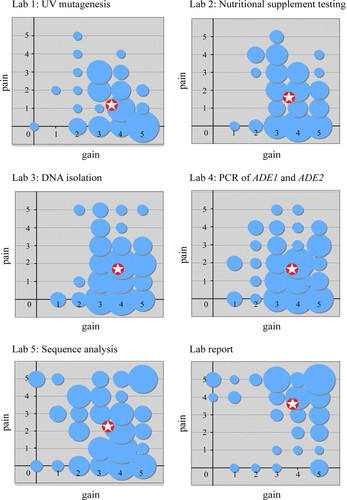
Figure 7. Student assessment of the cost–benefit ratio for laboratory sessions and lab report. Students in the 2006 course were asked to use two scales, one scale for “pain” and one scale for learning “gain,” to rate the major activity of each lab meeting and the writing of the lab report describing the project. “The learning gain scale was 0, ‘I got nothing from this’ to 5, ‘this successfully helped me learn important things about biology’.” “The pain scale was 0, ‘no pain at all’ to 5, ‘horrible, miserable agony’.” This assessment tool was patterned after one developed by Rachel Merz at Swarthmore College. Each student response (n = 77, of 85 students in the course) was plotted at the appropriate pain/gain coordinates, with the sizes of the points proportional to the number of students returning the same pain/gain values. For example, in the case of the UV mutagenesis lab, only one student reported a pain = 2, gain = 1 score, whereas eight students reported pain = 3, gain = 3 score. A few students returned noninteger responses. The average pain/gain values for each case are shown by the position of the star.
Confirming the previous study, students reported gains from the laboratory experiences. For each lab the median gain was 4; for each lab the mode for the gain score was 4, except for the second lab (Nutritional Characteristics of Yeast) for which the mode was 3. A majority of students scored each lab as a 4 or a 5 on the gain scale (53–61% of respondents), with 75–95% of students returning a score in the top half of the scale (between 3 and 5).
Student perception of the pain associated with each of the laboratory experiences revealed a median score for the first four labs of 1 and a median score for the computer lab of 2. The mode of the pain score for each of the five labs was 0. Thus, the most common experience of students in these labs was expressed in terms of no or little pain.
Visual inspection of the data suggested that the distribution of the pain scores of the different labs might vary. The data for the first four labs each showed a descending trend in which the number of observations in bins for successively higher pain scores decreased. In contrast, for the computer lab, the number of students reporting each pain score was considerably more uniform. Although this might have suggested a higher perception of pain (and a more variable experience) for the computer lab compared with the other labs, an ordinal logistic model that was fitted using SAS (SAS Institute, Cary, NC) did not demonstrate a statistically significant difference between any of the five laboratory experiences (i.e., estimates of the β values were not distinct). Thus, there seemed to be no distinction between the pain levels associated with the computer lab compared with the other labs. We note that these surveys were done after 5 yr of instructor experience with the project, including changes to improve the ways in which students prepare for the computer lab. We thus suggest that instructors should be sensitive to the potential for “pain” when students undertake the computer lab; good student preparation for the lab and clear statements about the objective of the lab session will probably help to reduce this sense of pain.
Finally, students fairly uniformly rated writing the lab report as a useful, but painful experience. Similar to the five laboratory experiences, the writing of the lab report was also seen as a beneficial experience—the majority reporting a pain score higher than 3 also reported a gain score of higher than 3 (30 of 51). This perceived gain came with significant pain. Thirteen of 77 students reported the maximum pain but also the maximum gain. The mode of the pain score for the lab report was 5 and the median was 4. This is in stark contrast to the laboratory experiences. The ordinal logistic analysis noted above showed that this experience was associated with significantly higher pain than the five laboratory experiences (p < 0.0001). Consistent with our experience, students viewed the act of writing as a painful experience, but one that is rewarded by new insight and a firmer understanding of the matter at hand.
Adaptability of the Project. One advantage to this project is that there are numerous ways of modifying or extending it. For example, we typically appended an exercise later in the semester in which students mated their uncharacterized red ade strains to a red strain that was known to carry an ade1 mutation and to a red strain that was known to carry an ade2 mutation (ATCC 42244 and HB2). From this experiment, students saw that in one of the two cases the mixture of two red strains resulted in an area of growth that was white. Subsequently, students then streaked these diploid strains on minimal plates lacking adenine to determine whether the cells in the white areas were truly Ade+. Students thus pondered how two strains, each of which are adenine auxotrophs and are red, could combine to produce a strain that was an adenine prototroph and was white. Ideas such as dominant, recessive, and complementation were thus discovered or discussed in a context with which the students were already familiar.
Starting in 2004, we also included a short computer laboratory exercise (included in the Supplemental Material 8_Student Exercises; FirstGlance) in which students examined the predicted structure of the wild-type form of the protein; students examined whichever of the two proteins whose corresponding gene carried the mutation. The cleft comprising the active site of the enzyme was readily identified. Students then identified the site of the protein that was directly affected by the mutation. In cases in which the ade2 nonsense mutation was used, it was made clear to the students that most of the protein, including the active site, was missing. In the case of the ade1 missense mutation, the mutation also seemed to disrupt the active site—the amino-acid residue that was affected was adjacent to the active site. Furthermore, the position of change was in the middle of an α helix, and the amino acid in the mutant was a proline, an amino acid that is typically a helix breaker.
If the project were to be implemented in a class whose focus was more on genetics or genomics there are other teaching possibilities. For example, as mentioned previously, the ade2 mutant allele that we have used has a total of at least four differences compared with the wild type in SGD. Two of these four changes are silent and would therefore not be responsible for the adenine auxotrophy phenotype. Of the two other mutations, one is a missense mutation and the other is a nonsense mutation. In principle, either of these two mutations could be responsible for the mutant phenotype. Without further experimentation, students could reason that the nonsense must be the mutation that gives rise to the phenotype because its location is upstream from the missense mutation. Furthermore, the missense mutation would not lead to the mutant phenotype since the allele is known to be nonsense suppressible; students could directly verify this by testing if the mutation is nonsense suppressible.
If this project is implemented in upper-level biology courses, it provides ample opportunities for advanced reading that connects to principles taught in molecular biology and genetics. For example, the investigation of the composition of the red pigment is described in Smirnov et al. (1967) and would be appropriate for teaching biochemistry. Fisher (1969) reports on the enzymological requirements for red pigment formation, and this article provides some parallels to the classic work done by Beadle and Tatum. If this project were to be adapted for a genetics class, the work done by Chaudhuri et al. (1996) provides an excellent example of a suppressor screen and of epistasis and emphasizes that the red pigment formation is not as simple as the accumulation of intermediates of the adenine biosynthetic pathway.
Some students appreciate a connection to issues of medical concern and such connections from this project and human medical concerns can be made. Deficiencies in adenine metabolism can lead to diseases such as gout, Lesch–Nyhan disease, and severe combined immunodeficiency (SCID) in humans. Brief explanations of the molecular etiology of these diseases are described in a document that we provided to our students and is part of the Supplemental Material 11_ Metabolism and Disease. Similar to the red pigment accumulation, the biochemical basis for SCID is more complicated than one might initially suspect. Ultimately, it seems that the salvaging of the accumulated purines triggers a feedback inhibition that starves cells for deoxyribonucleotides. An advanced-level genetics class could use this project as the stepping stone to discuss SCID and in developing an appreciation that metabolic pathways cannot always be considered to have the linear logic that we apply in beginning biology courses. More recently the adenine metabolite AICAR has received significant attention (Zarembo, 2008). AICAR is a compound that is made by an enzyme that acts directly after Ade1. A recent study showed that providing sedentary mice with a dose of AICAR allows longer treadmill running compared with mice that did not receive the AICAR (Narkar et al., 2008), leading to the suggestion that AICAR represents “exercise in a pill.”
CONCLUSIONS
We have developed a 5-wk, integrated laboratory project for an introductory biology course whose goal was to increase student understanding in five subject areas: metabolic pathways, mutation, central dogma, protein structure/function, the genetic code. Student understanding of these areas were assessed at the start of the semester and at the end of the semester through the use of a true/false quiz. The results of the quizzes showed that by the end of the course, students did have an increased understanding of these topics. Because these topics were covered both in the laboratory and in the lecture part of the course, students were asked to declare how strongly they agreed or disagreed with the statement that the lab project played a role in their understanding of each topic area. The results from this survey strongly suggested that the laboratory project is an important component in student learning in these five subject areas. More open-ended feedback to determine what students felt was the best part of the project was consistent with the survey data—many students reported that the best thing was an increased understanding in a particular subject area. This feedback also revealed that the project enabled a synthesis of more than one of these subject areas and that students appreciated the chance to learn new laboratory techniques. Thus, the project met the goal of increasing student understanding in the subject areas, and the data suggested that the lab project was responsible for at least part of this advance in understanding. The project can be extended to be part of a larger project and could be adapted for upper-level courses.
ACKNOWLEDGMENTS
We thank the Principles of Biology students for willingness to participate in this study and endure our assessment quizzes and Catherine Walker who helped greatly in implementing these online quizzes and surveys. The laboratory materials were prepared by Natalie Romero, Frank Castillo, Sharon Coope, and Malinie Ratnayake. Mark Salata gave invaluable advice in designing our assessments. Thanks are due to Rachel Merz for sharing her pain/gain assessment with us and to Elizabeth Vallen for helpful discussions about this assessment. Jim Bentley, Kathleen Silva, and Susan Blauth gave useful advice about statistical testing of our data. Ray Deshaies provided several yeast strains used to develop this project. Help in data entry was provided by Jocelyn Buzzas, Sara Ruiz, and Andrew Munson. We also thank numerous colleagues who have cotaught the course during the time of this study: James Blauth, Lisa Olson, Caryl Forristall, Chris Ilgen, and Angela Burke-Herrick.